
Shower Room Design Ideas
Explore 135+ shower room design ideas from our completed UK installations — including small bathroom layouts, walk-in screens, corner enclosures, and bespoke shower enclosures in black, brass and frameless designs. Filter by style, finish or feature to find inspiration.
Shower room ideas from real UK installations
Every layout here is a project we designed, supplied and installed — no renders, no stock images, no AI.
- 135+ real shower rooms — walk-in, corner, loft, bath, bespoke shapes
- Filter by style, glass, finish, frame or feature to shortlist ideas
- 10mm toughened glass fitted across London and the UK
- Every layout tailored to the bathroom's exact dimensions
- Click any project for photos, hardware spec and installation notes


Inspired? Let's create your perfect shower room.
Every project starts with a free survey. We'll visit your bathroom, take precise measurements, and give you a full quote — no obligation.
Need more time? Browse all our work.
No projects match your filters
Try removing some filters to see more results.
Project 1 of 137 selected
Best Walk-in Shower Ideas
Walk-in is the idea most clients come to us with first — open, seamless, no doors. Go for walk-in if your bathroom has the floor area to support it: the spray stays contained and the shower becomes the centrepiece. In compact rooms the same layout lets water escape, so plan it carefully before committing.
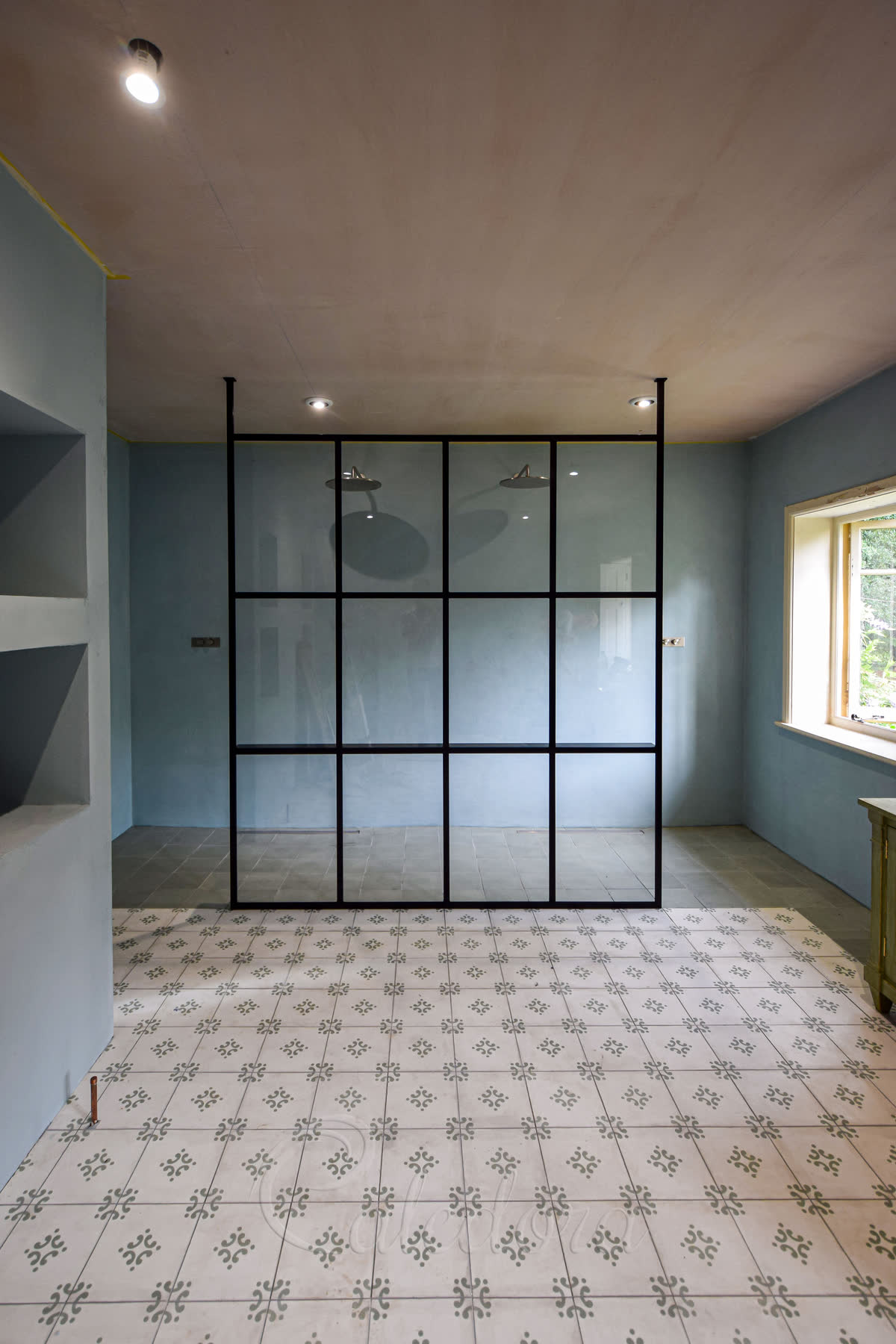
Plan walk-in in a bathroom with a generous tray footprint. You need space at the entry, room for a towel radiator beside the opening, and enough ceiling height to fix the walk-in shower screen floor-to-ceiling. That top fixing matters structurally — without it, a large panel flexes in use and needs a 90-degree reinforcement arm back to the wall to hold steady.
Choose between two walk-in looks. For minimalism, go frameless: 10mm glass recessed straight into the ceiling and floor, with no metal profiles or visible reinforcement bars. For presence, go framed: a black grid or bronze perimeter turns the screen into a visual divider, carving the shower zone from the bathroom the way a black-framed glass partition separates rooms in an open-plan loft.
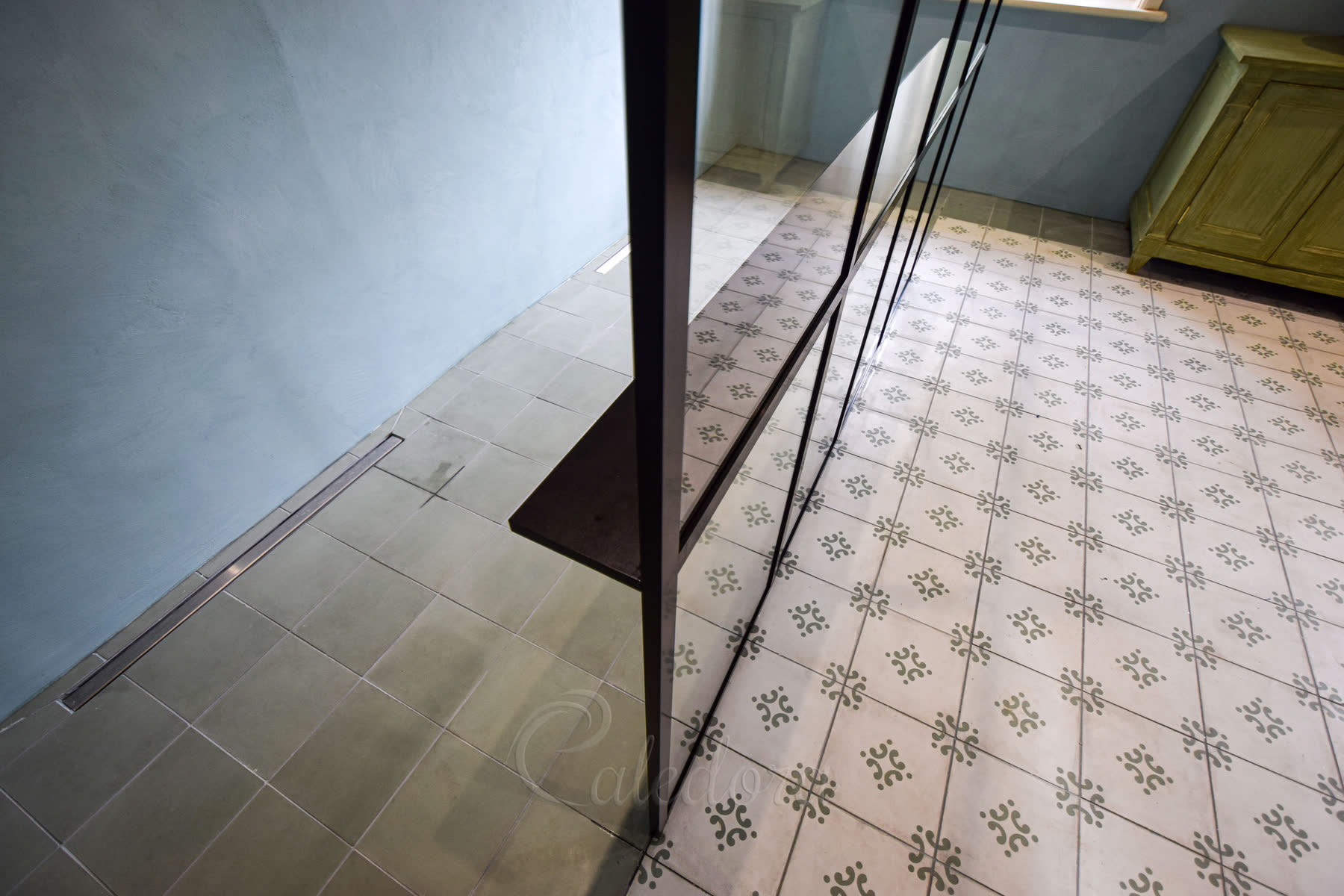
For what this looks like built: a floor-to-ceiling black grid walk-in shower screen we completed in Lewes divides a generous bathroom into shower and dressing zones without fully enclosing either. Two shower heads serve the walk-in for two, and a slim shelf — fixed through the glass with its bolts hidden behind a horizontal bar — turns the screen into working structure. A well-planned walk-in, end to end.
Small Shower Room Design Tips
Most UK bathrooms are small — especially in London and the south-east, where every square foot is expensive. In a tight room, the shower layout has to do more with less. Two setups work for small shower rooms; pick yours based on whether you can spare space for a bath.
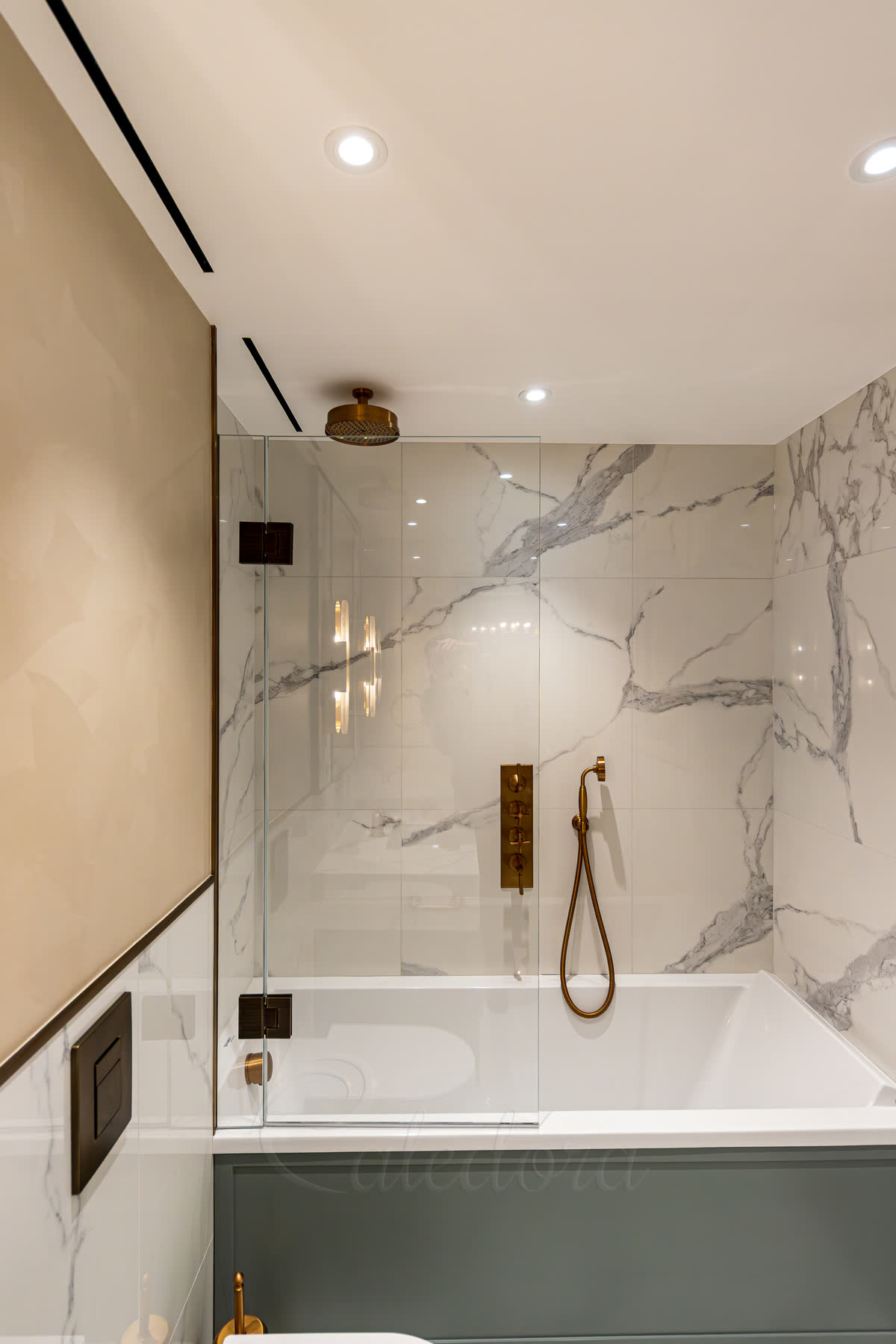
Frameless Bath Screens
A bath with a frameless bath shower screen overhead gives you two functions in one — warm soak in the evening, quick shower in the morning, from the same fixture. Frameless keeps the room feeling light without heavy metal profiles closing it in. Walk-in needs a deep tray to contain the spray — on a compact tray, water escapes through the opening.
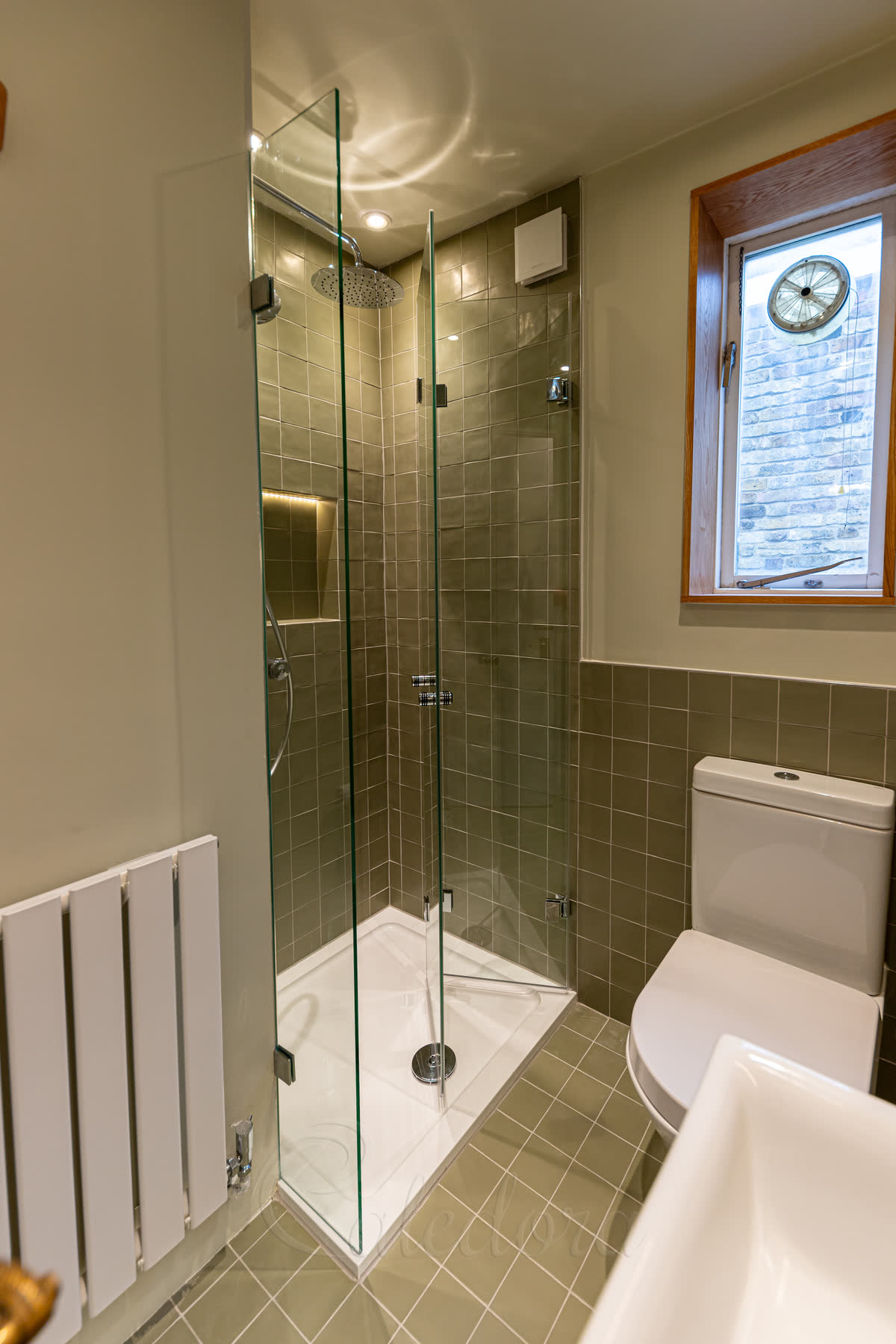
Bi-fold Shower Doors
Where a bath won't fit, go for a small tray with a bi-fold shower door. Bi-folds can fold in any direction — the inward fold is essential when a toilet sits in front of a tight tray. On a larger tray you could use a hinged door opening inward; on a tight one, the bi-fold stays flat against the side. Corner enclosures are another option — covered next.
Corner Shower Enclosure Ideas
Corner is where most showers end up — two existing walls do half the work, the floor stays usable, and light comes in from two sides. Three setups cover nearly every corner install; pick based on how tight the space is and what's around it.
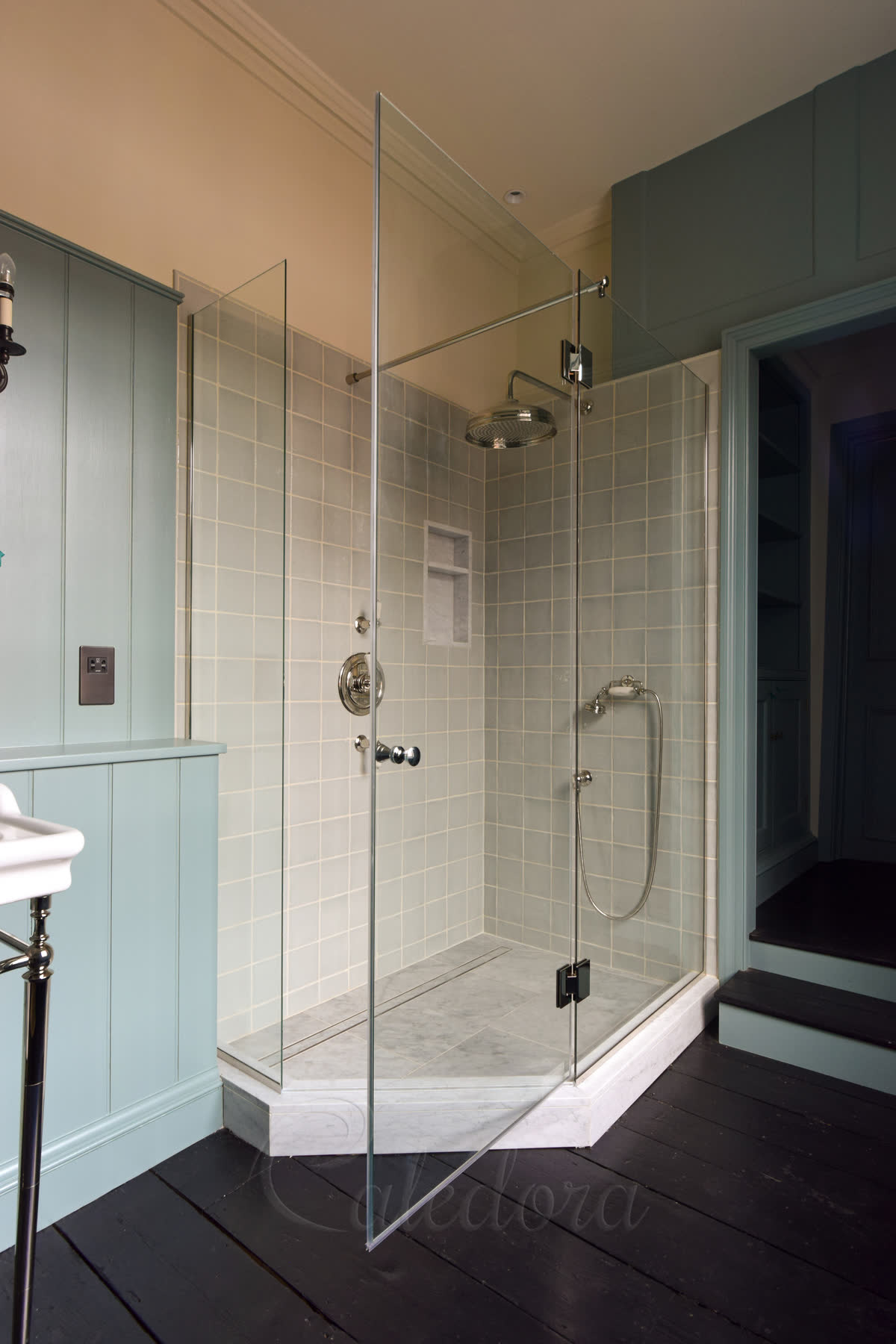
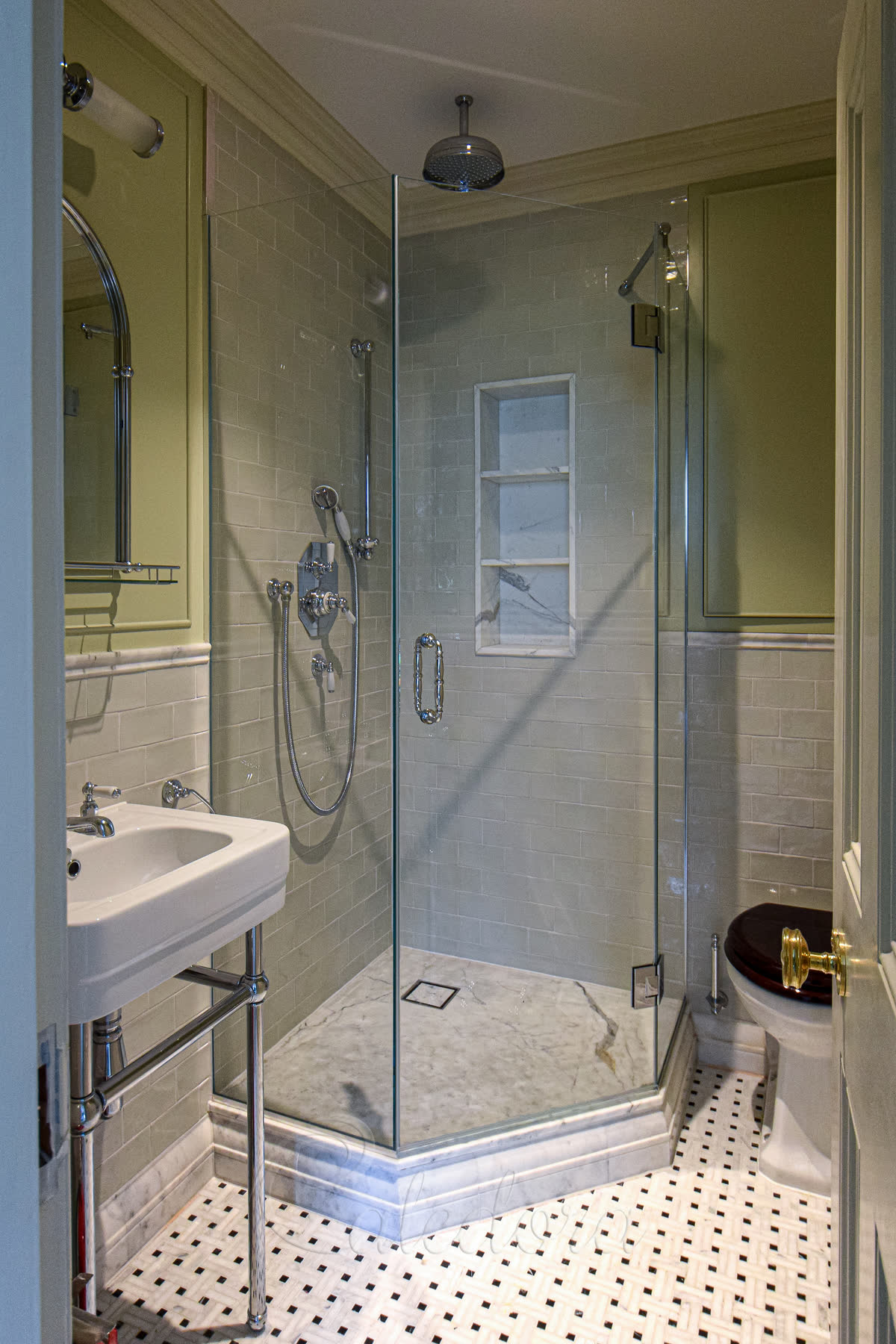
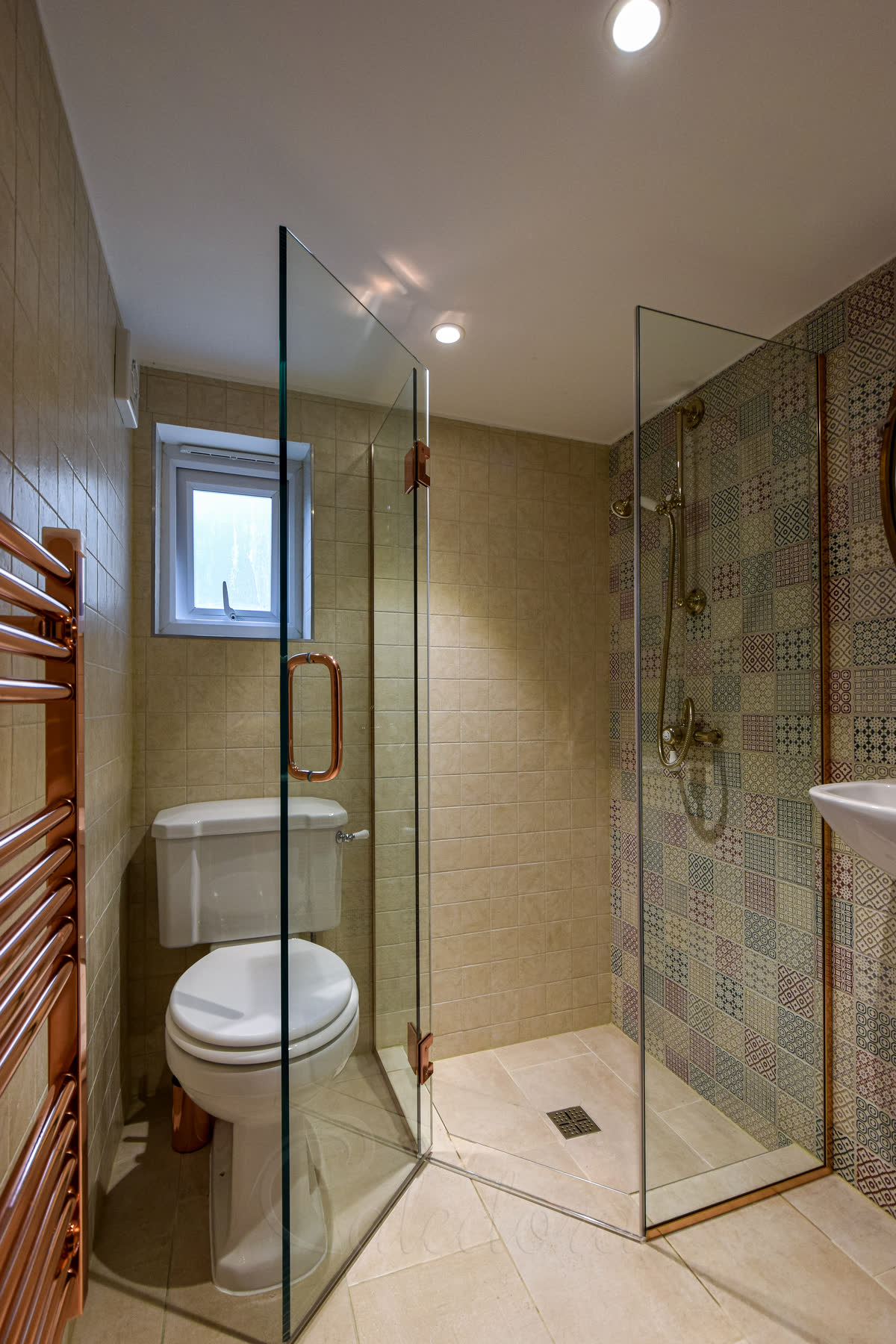
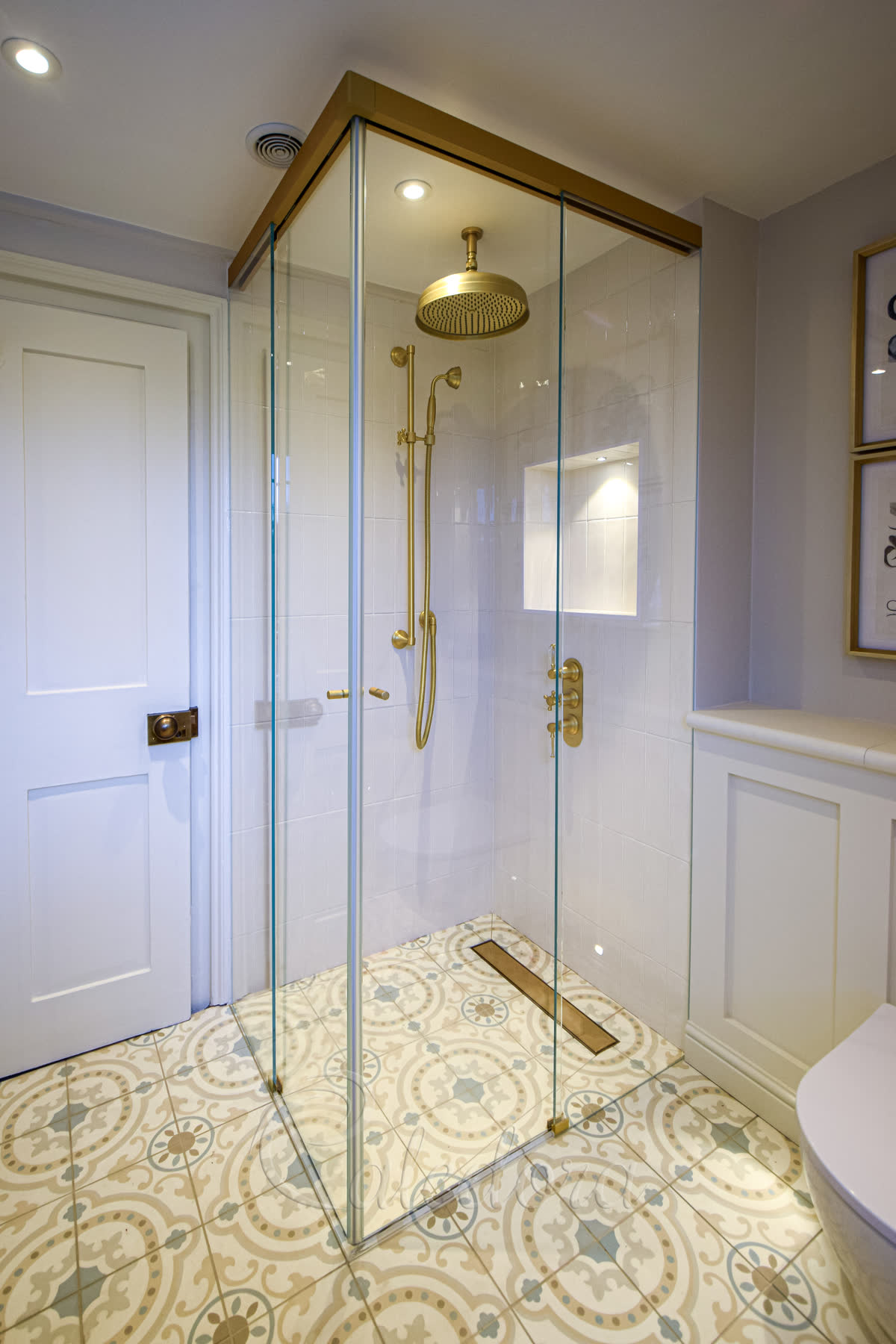
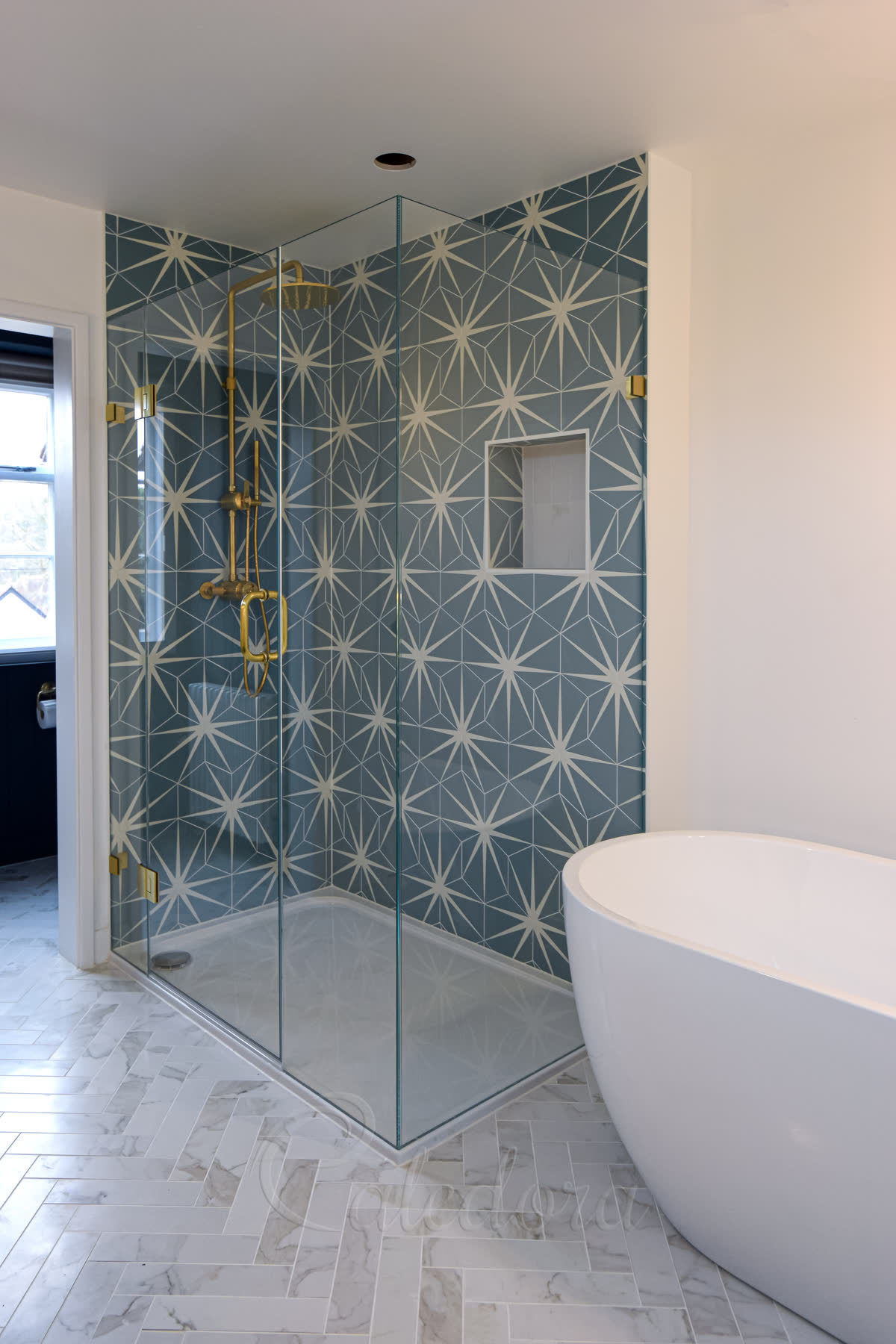
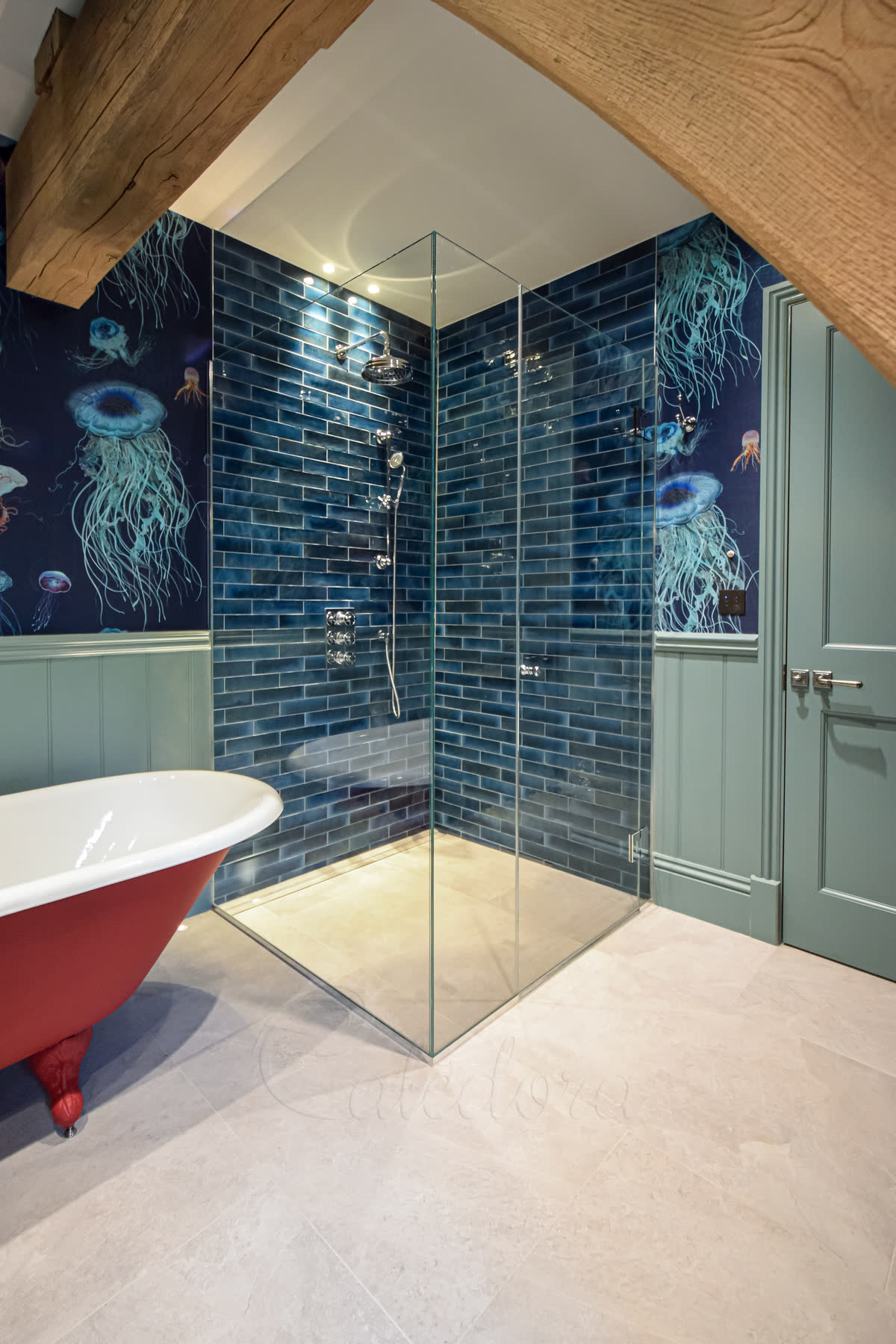
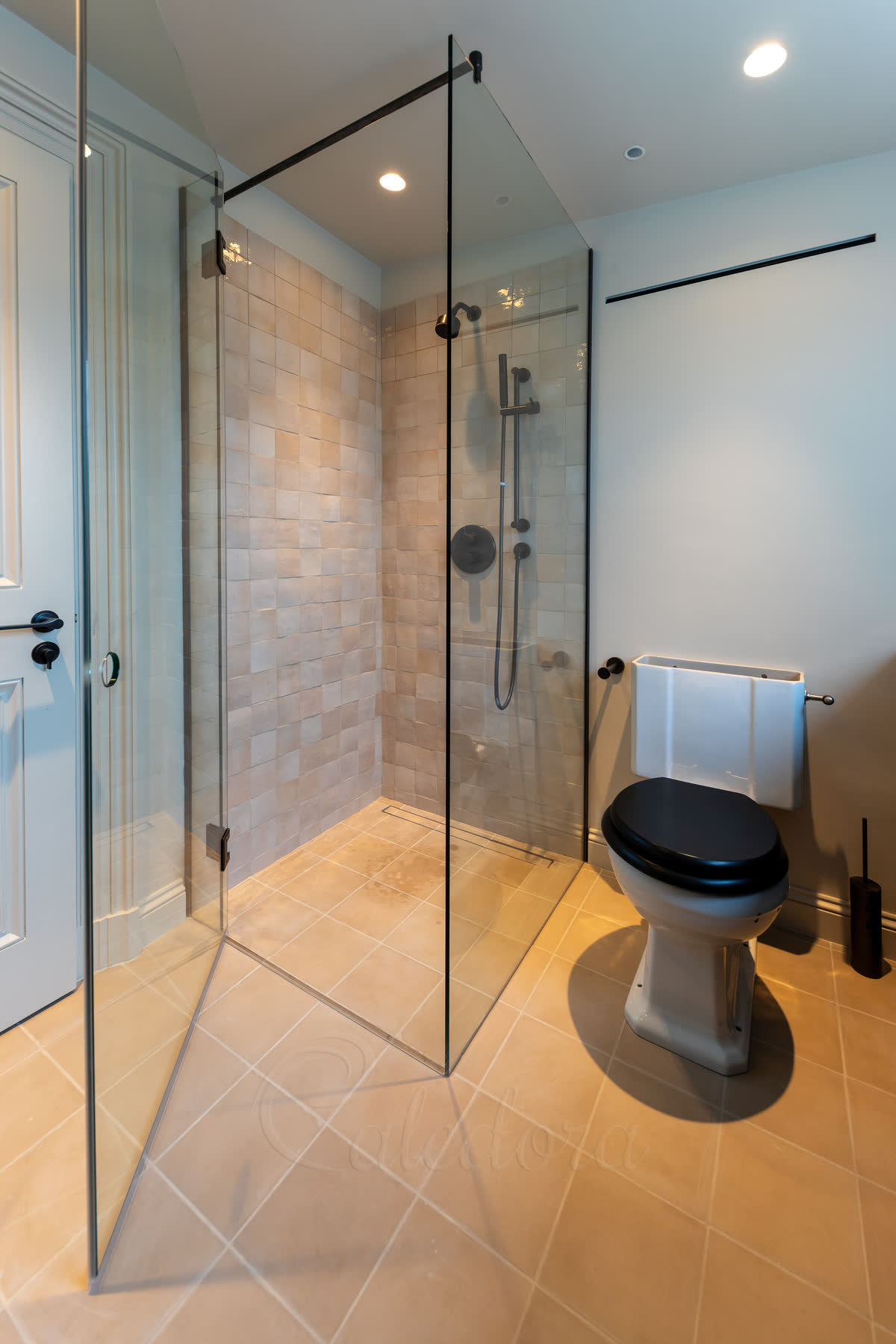
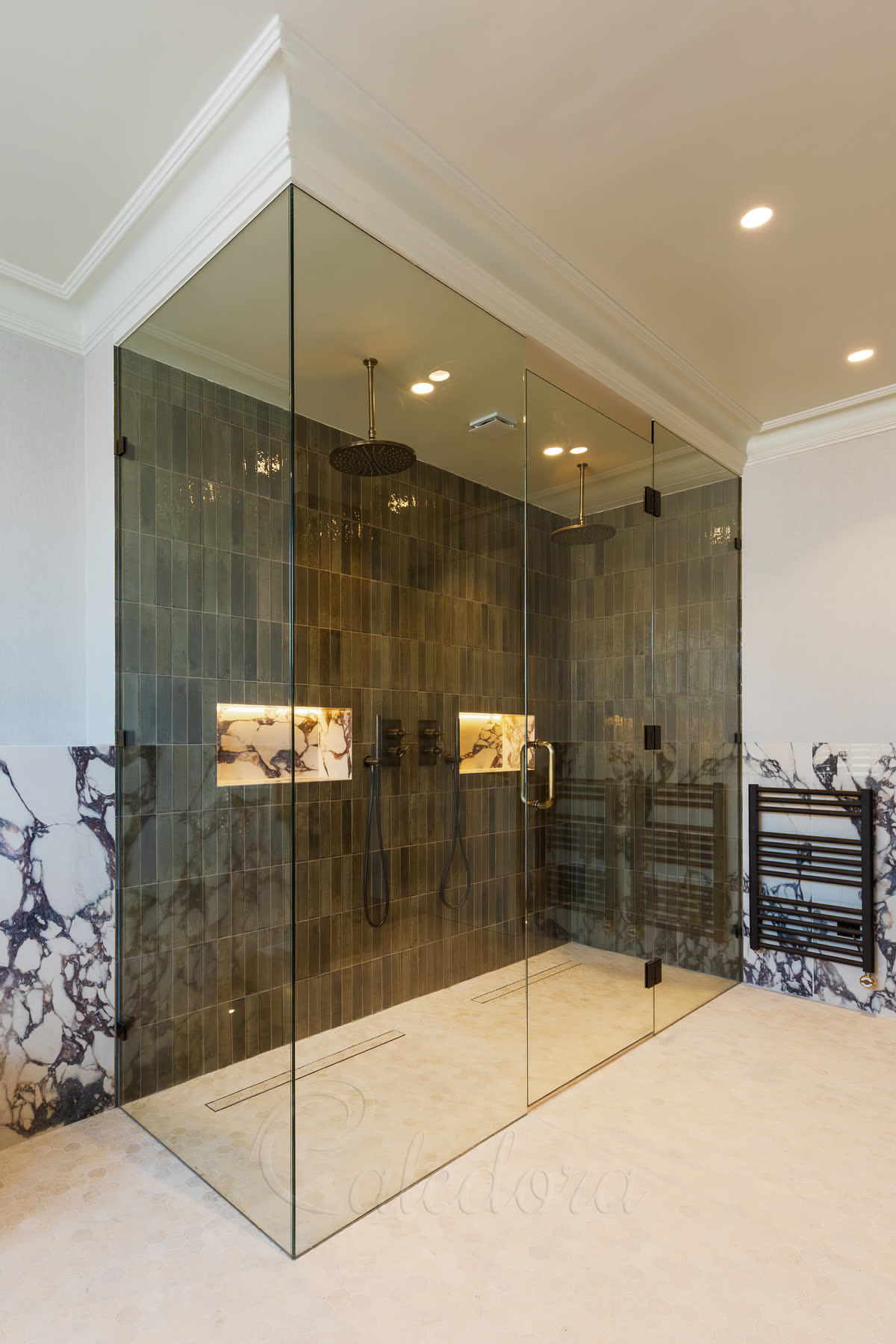
Pentagon
A pentagon shower enclosure fits when fixtures block both sides of the corner — typically a toilet on one side and a basin on the other, under 900×900mm. Two fixed panels meet the walls at 90°; the angled door sits between them at 135°, swinging outward to clear both fixtures. Also called diamond or pentangular.
Corner Sliding Doors
Corner sliding doors work when furniture blocks any swinging door. Two doors meet at the corner and slide outward behind two fixed inline panels, joined by PVC seals with magnetic strips. The enclosure is slightly deeper than a pentagon, but nothing swings into the room — footprint open matches footprint closed.
Standard L-Shape
Go for a standard L-shape when the door's side isn't blocked — cheapest and most common. A small face panel and a return screen UV-bond glass-to-glass, with the door on a tiled wall. The two panels support each other — no reinforcement bars, no brackets, no fixtures on the glued corner. Most corner shower enclosures we fit start here.
Loft Shower Design Under Pitched Roofs
Loft is where the design follows the roof line rather than the floor plan. Two layouts cover most loft showers we fit: a corner enclosure under one pitched side, and an under-eaves setup where the ceiling drops from both sides or the back. The approach differs by roof pitch; the planning demands don't.

Angled Corner: Under a one-sided pitched roof, the tray sits in the tallest corner. One fixed screen is cut to follow the slope — or the door itself if it can still open freely. Standard L-shape: two UV-bonded fixed screens plus a wall-hinged door in a loft shower enclosure.
Under Eaves: When the ceiling drops from both sides or the back, the shower sits at the end of the room as a partition. Two fixed panels follow the side slopes; between them, a flat-top door sits under the highest ridge, swinging 90° outward. Bench seating often runs beneath the lowest ceiling line — the sloped ceiling shower enclosure type.
Plan Ahead: Plan the loft shower in detail. Shower head in the tallest corner, door with clearance to open, clear entry access, towel within reach of the doorway. When the door top follows a ceiling slope, the hinges must sit on the high side — that's the only way the door can open.

Frameless Shower Design
Frameless Shower Details
Frameless shower design rewards planning more than budget. The real question isn't whether to go frameless — it's how to make it look truly frameless once installed. Three details separate a frameless shower that reads minimal from one that still shows its hardware: where the glass sits, what glass you pick, and how the door is sealed.

Recess the Glass, Pick Ultra Clear
Recess the fixed panels directly into the ceiling or wall. Frameless also works with visible U-channels and wall brackets, but slotting the glass into a groove cut through the tile hides every side fixing — the screen appears to emerge from the wall itself. Pair the install with Ultra Clear glass: standard toughened glass carries a faint greenish tint that shows up on the edges and undermines the pure-glass look you're paying for.
Seals That Disappear
Frameless shower doors always need perimeter seals to contain water — standard PVC strips work but read as an afterthought. We commissioned our own minimalist seals, made to order, that sit flush with the glass edge and are barely noticeable once fitted. Look closely at our project photos: every frameless door shown is photographed with the seals in place, not removed for the shot.
Black Shower Ideas: Framed or Frameless?
If you're drawn to black, you're in good company. Chrome covers most bathroom taps and shower heads, so black is what most UK clients reach for when they want the enclosure itself to stand out against pastel or white tiles. The question is how you want that black to appear.
How Black Shows Up
Black can enter a bathroom in four ways: as continuous framed lines, scattered frameless hardware, tinted grey glass, or adapted to uneven walls. Each reads differently, suits different rooms, and needs slightly different planning. Here's how to choose.


Framed Black
Go for framed black if you want a feature piece and the budget allows. Our framed enclosures use minimalist anodised aluminium with gaskets and fixtures hidden inside the frame. Framed water-seals best, accepts patterned or laminated glass, and is the only route to black grid shower enclosures.
Frameless Black
Go for frameless black if the budget's tight or you prefer minimalism. We finish the hinges, handles and wall fixtures in black to match the rest of the room. Hardware reads as 100×90mm rectangles on glass rather than a continuous outline — costs significantly less than framed.
Uneven Walls
Whether to go framed or frameless is the first decision. Black is unforgiving on wavy walls. Continuous framed lines amplify every contour bump — on older British buildings, this can look dramatic even if the walls are only slightly off. Frameless glass shapes to wall contours and hides imperfections behind its edge. If the walls aren't flat, frameless saves the install.
Grey Tinted Glass
For maximum drama without heavy hardware: 10mm grey tinted glass instead of standard clear. Thick grey reads as solid black from outside, with a dark-shaded view of the tile from inside the shower. Works with both framed and frameless — it changes the effect, not the structure.
Bring Us Any Shower Design
Every shower in this gallery started the same way: a site visit. We measure the walls, check the floor pitch, note where the towel rail sits and where the basin projects into the shower line. Over half the UK bathroom walls we survey are more than 5mm off level. That's why nothing here is a standard size.

Bespoke white-grid steam shower
Briefed, Not Bought
Bespoke isn't a size option — it's a design brief. Glass thickness, fluted or reeded texture, frame profile, door direction, hinge position, hardware finish (matt black through to a brushed gold shower screen), seal design, tray interface — each choice gets decided against your room, not pulled from a catalogue. The deeper the brief, the better the fit. Most conversations start vague and get specific through the survey and the 3D mockup.
Starting Your Project
Every project begins with a free site survey. We come to your bathroom (finished or mid-refurb), take measurements to millimetre accuracy, photograph the junctions, and return with a 3D mockup. From there our bespoke shower service covers design, manufacture and installation as one process. If something in this gallery sparks an idea, that's the place to start.
Frequently Asked Questions
How experienced is Caledora in shower installation?
Our senior team has over 25 years of specialist experience in glass fabrication and shower installation — this is the only trade we've ever worked in. Caledora's UK company, Creative Glass Studio Ltd, was established in 2014 on the back of earlier glass-and-shower experience. Between our lead installers, workshop fabricators and surveyors, thousands of shower projects have been delivered across the team's combined careers.
How recent are the projects shown in your gallery?
Our projects gallery launched in 2025 with the current website. Before that, only a small number of installation photos appeared on our older service pages — there was no dedicated portfolio with project descriptions. The 135+ projects shown here are a curated recent selection. We hold photographic records of 2,000+ completed installations and have fitted many more still across the team's combined careers. New projects are added as we photograph and publish them; anything covered by NDA or the client's explicit request is never posted.
Can I use a project from the gallery as a reference for my own shower?
Yes. Any installation shown can be used as a starting point — you can match the glass type, hardware finish, door configuration or overall proportions. Share the project page URL in your enquiry and we'll advise what transfers to your space and what needs to adjust. Most clients arrive with a shortlist of two or three gallery references.
Are the installations in the gallery real client projects?
Every photograph is a completed Caledora installation in a real UK home. We can't be on every site with a camera, so only a fraction of our installations are photographed, usually on the day of fitting. A client who doesn't want photographs taken simply tells us in writing before ordering. Before publishing, each image is reviewed and any people or personal items in frame (family photographs, documents, addresses, phone numbers) are blurred, cropped or removed. Client names, addresses and personal details are never published, and locations are given by town or city only. The portfolio shows the glass work, not the home it sits in.
How do I find gallery projects similar to the shower I want?
The main service pages each showcase a selection of installations in a specific style — walk-in, hinged, sliding, frameless, or black-framed — drawn from the same projects pool. That's typically the fastest route to similar projects. Every project page lists the glass type, hardware and room context, so you can compare specifications directly against your own requirements.
How can I find gallery projects within my budget?
The gallery's side-panel filters include a £-symbol range selector, letting you view only projects within your budget. As a rough guide: simple screens fall around £ (up to £1,700), standard frameless enclosures around ££, upgraded glass or larger enclosures £££, framed configurations ££££, and high-end or bespoke framed work £££££ (£9,001+). Every project shown was a complete installation covering survey, design, production and fitting — we don't offer supply-only. Prices assume travel within one hour of our Milton Keynes or London offices; further afield may adjust. VAT is added where required. Each tailored quote is valid for 15 days.